
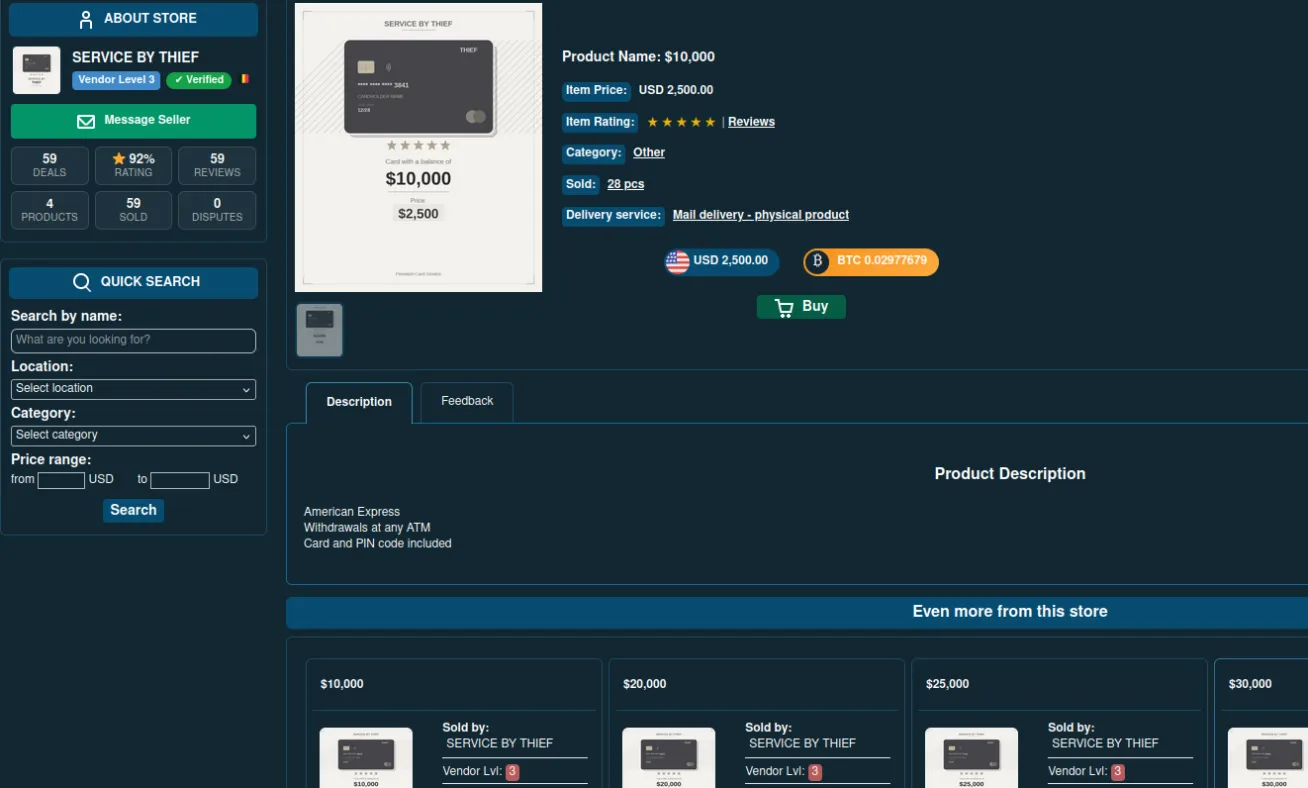
Mark T. believed he had discovered a simple way to make money. He acquired six cloned debit cards, complete with PINs, through a darknet marketplace, investing $480 in cryptocurrency. Initially, he successfully withdrew $4,200 from three different ATMs. However, it was at the fourth ATM that his criminal activities came to an abrupt halt, leading to his arrest within days.
1. Understanding Carding: The Process
Carding refers to the illegal trade and use of stolen banking information. Mark’s approach exemplifies a standard method in the carding world:
- Data Acquisition: Criminals gather stolen magnetic card data through various means. This includes using skimmers on ATMs or purchasing stolen data from darknet sources.
- Card Creation: The stolen information is then embossed onto blank plastic cards, mimicking legitimate cards.
- PIN Compromise: If a PIN is acquired through methods like hidden cameras, the card becomes ready for use.
- Cash Withdrawal: The perpetrator collects cash from ATMs before the victim can react.
- Laundering Funds: The withdrawn cash is converted into cryptocurrency to mask the trail.
2. The Role of Surveillance in ATM Security
ATMs serve as more than just machines for cash dispensing; they double as surveillance devices. Key features include:
- Built-in Cameras: Recording at 1080p, these capturing the user’s face. Night vision capabilities are common.
- Hidden Cameras: Many ATMs have a second camera, providing additional angles.
- Transaction Logging: Each transaction is meticulously logged, noting the withdrawal time, amount, card number, and ATM location.
- Geolocation Tracking: ATMs document their coordinates, essential for investigations.
- Network Logs: They keep records of interactions with bank processors, including metadata.
When Mark accessed the fourth ATM, the built-in camera captured clear footage of his face. It provided law enforcement with enough evidence to identify him quickly.
3. Timeline of the Investigation
The timeline offers a clearer view of the rapid investigation process following the fraudulent transactions:
Day 1: Victims in Florida, Georgia, and North Carolina report unauthorized withdrawals from their accounts, prompting banks to act. Day 3: The banks’ fraud detection systems highlight suspicious activity involving cloned cards across states, raising an emergency flag. Day 5: The case escalates to the U.S. Secret Service for a deeper investigation into the financial crime. Day 8: Video footage from the fourth ATM reveals Mark’s identity. Database checks confirm his identity with no prior criminal history. Day 12: Investigators obtain access to Mark’s digital footprint, linking him to the cryptocurrency purchase. Day 14: A search warrant leads to the discovery of incriminating evidence in Mark's home, including cloned cards and a device for card manipulation. Day 15: Mark is arrested and admits to the crime during questioning, revealing he attempted to use all six cards, but two had been deactivated.
4. The Numbers Behind the Crime
Breaking down the financial aspect of Mark’s case highlights the criminal motivations. Here’s the summary:
| Description | Amount |
|---|---|
| Total withdrawals | $4,900 |
| Cost of cloning cards | $480 |
| Days from first withdrawal to arrest | 15 days |
| Federal prison sentence | 5 years (60 months) |
| Total fines and restitution | $22,000 |
| Supervised release period | 3 years |
5. The Limitations of Cryptocurrency
Mark opted to use Monero, a cryptocurrency designed to enhance user privacy. However, the investigation highlighted critical vulnerabilities in his approach:
- Centralised Exchange Use: Mark bought Monero from a platform requiring KYC verification, connecting his identity to the transaction. This was a significant flaw.
- Timing of Transactions: His acquisition of cryptocurrency, the purchase of cards, and ATM withdrawals all occurred within a brief two-week window, generating substantial circumstantial evidence.
- Physical Evidence Found: The seized cards contained traces directly linking them to the stolen data. This evidence was insurmountable in the investigation.
- Video Evidence: The clarity of ATM footage of Mark’s face formed irrefutable proof, irrespective of his attempts to remain anonymous.
6. Missteps That Led to Mark's Arrest
Several critical errors contributed to Mark’s downfall:
- Geographic Concentration: All ATM withdrawals were made within a 40-mile radius, raising immediate red flags.
- Lack of Disguise: Mark’s unmasked appearance in ATM footage facilitated quick identification.
- KYC Compliance: The use of a centralized exchange to buy cryptocurrency linked his identity to the illicit purchase.
- Storing Incriminating Evidence: Mark kept crucial items, including devices used for cloning, in his home, allowing for easy discovery during the search.
- Cash on Hand: The proximity of the cash seized to the denominations dispensed by the ATM strengthened the case against him.
- Rapid Withdrawals: Completing all transactions within two weeks heightened the likelihood of detection by fraud systems. A more prolonged approach might have delayed authorities, yet surveillance would remain a challenge.
7. Key Insights for Security Experts
Mark T.’s case exemplifies how robust anti-fraud systems can outpace criminal tactics. Here are crucial takeaways for cybersecurity professionals:
- Immediate Fraud Detection: Banks’ anti-fraud systems serve as a critical first line of defence, effectively identifying suspicious patterns.
- Integration of Forensic Evidence: Combining physical video evidence with digital transaction logs enhances investigation efficacy; understanding the timing of events is paramount.
- Cryptocurrency Anonymity Misconceptions: The use of KYC-compliant exchanges undermines the anonymity of cryptocurrencies; this remains a significant hurdle for criminals.
- Importance of Customer Vigilance: Educating clients about identifying potential fraud and the need for prompt reporting can reduce losses significantly.
8. The Final Ruling
In March 2025, Mark T. faced court proceedings and pleaded guilty to charges related to fraud and money laundering. He received a 60-month federal prison sentence, along with a fine of $22,000 and a requirement for restitution to the three victims.
The presiding judge highlighted his role as a buyer rather than the scheme's orchestrator. However, it was this final link in the chain that bore the consequences. Organisers of such schemes often evade detection longer, presenting ongoing challenges for law enforcement.
Mark's Case: A Cautionary Tale
Mark’s story is not one of genius but rather an illustration of how robust security measures can effectively deter criminal activities. His underestimation of surveillance technology and the effectiveness of fraud detection systems led to his capture within just over two weeks. For those engaging in cybercrime, the consequences can be swift and severe, underscoring the importance of adhering to security protocols and the limitations of perceived anonymity in the digital landscape.
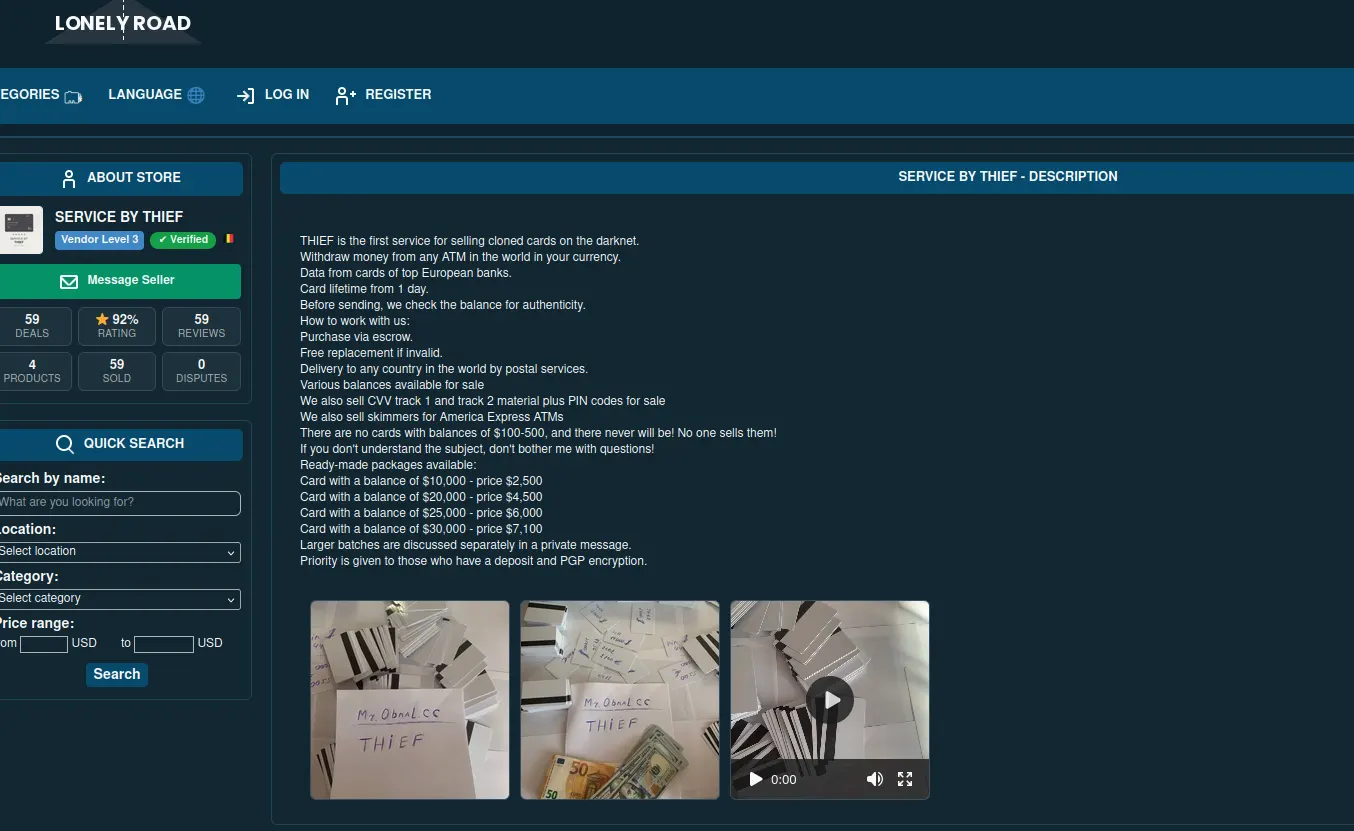
The darknet marketplace facilitated Mark's illegal transaction for cloned cards.